Save Time: Get 5 Simple Writing Tips
you can put to use in 10 minutes
How to Build Social Proof When You Have Zero Clients or
Readers
Award-winning writer Kathy Widenhouse has written 9 books and garnered 800K+ views for her writing tutorials.
Updated 9.22.26
Every successful freelancer, solopreneur, consultant, and small business owner started in the same place:
- Zero clients.
- Zero testimonials.
- Zero reviews.
- Zero case studies.
That was me. And you may be in that same place. If you’re just getting started, you might wonder, “How can I convince someone to hire me if no one has hired me yet?”
It’s a fair question — but here’s the good news.
You don’t need paying clients to show readers and prospects that you’re worth a shot.
You simply need evidence. Evidence that you’re knowledgeable, reliable, and capable of delivering results.
Gather evidence — and you build social proof
What we’re talking about here is social proof — it’s feedback from real people about you, your product, or your service. Social proof is evidence that helps people feel confident choosing you.
Social proof isn’t just about glowing customer testimonials. It’s about demonstrating credibility in many different ways. It tells potential prospects and readers that …
- Other people trust you.
- You know what you’re doing.
- You can solve their problem.
- You’re worth the investment.
While testimonials are one form of social proof, they’re far from the only one. That’s great news if you’re just starting out!
Why people hesitate before hiring a new writer
Put yourself in your prospective client’s shoes. Hiring someone new generates uncertainty.
- Can this person really do the work?
- Will they meet deadlines?
- Will they communicate well?
- Are they experienced enough?
- Is this worth my time?
- Will I regret hiring them?
To build trust, answer those questions before they’re asked. The more evidence you provide, the less risky hiring feels to the client.
Can you build social proof without a large following or without clients?
Absolutely. Every established business once had its very first customer.
The ones who succeed don’t wait for testimonials to build credibility. Instead, they showcase their knowledge, skills, professionalism, and commitment in other ways.
Think of social proof as a puzzle. Testimonials are one piece — but there are many others.
Start building your credibility with these parts of the social proof puzzle.
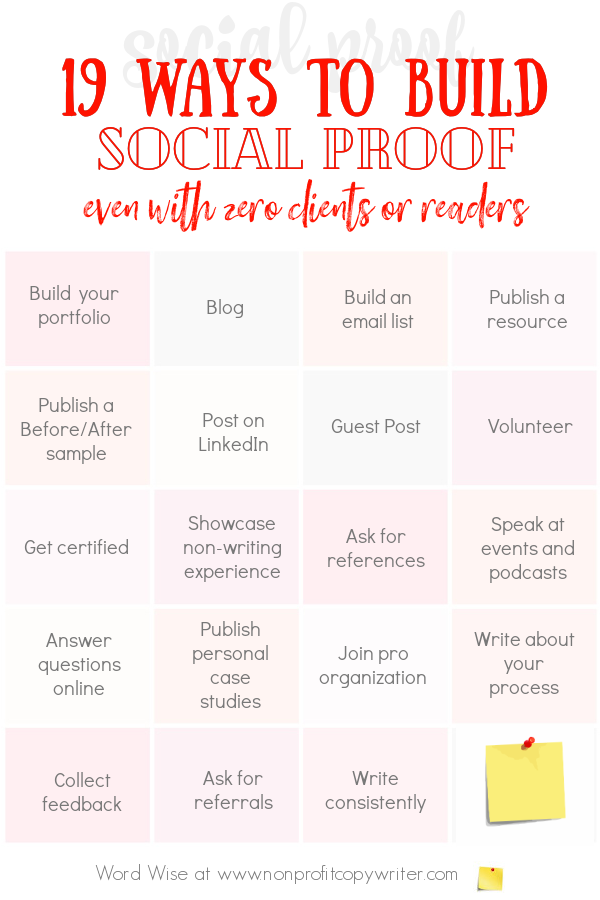
19 ways to build social proof before you have readers or clients
1. Create a quality portfolio
Don’t wait for client projects. Create your own.
- Publish blog posts, website copy, and articles. Post them on Medium or your own website.
- Build something simply because you’re interested. A resource guide, an original research project, a sample grant application — all can showcase your abilities just as effectively as work-for-hire.
Pack your portfolio with quality pieces you create, whether paid or unpaid. The key here is “quality.” Your self-published content — if it’s good stuff — demonstrates you can write well.
And that’s one of the most powerful forms of social proof you need to get hired.
2. Start a blog
A blog demonstrates expertise better than almost anything else. Each helpful article becomes evidence that you understand your field.
Use your blog posts to teach, explain, solve problems, and share practical advice in your niche. Over time, your content becomes a portfolio of knowledge about your subject.
3. Build an email list
Yes, now — even if your mom is your only subscriber. Publish your newsletter at a regular interval, say weekly. You’ll learn how to produce content consistently. Plus, by starting small, you’ll have time to get a newsletter template in place and get all the technical gobbledygook squared away before you start to feel excess pressure.
Focus on consistency, not subscriber numbers.
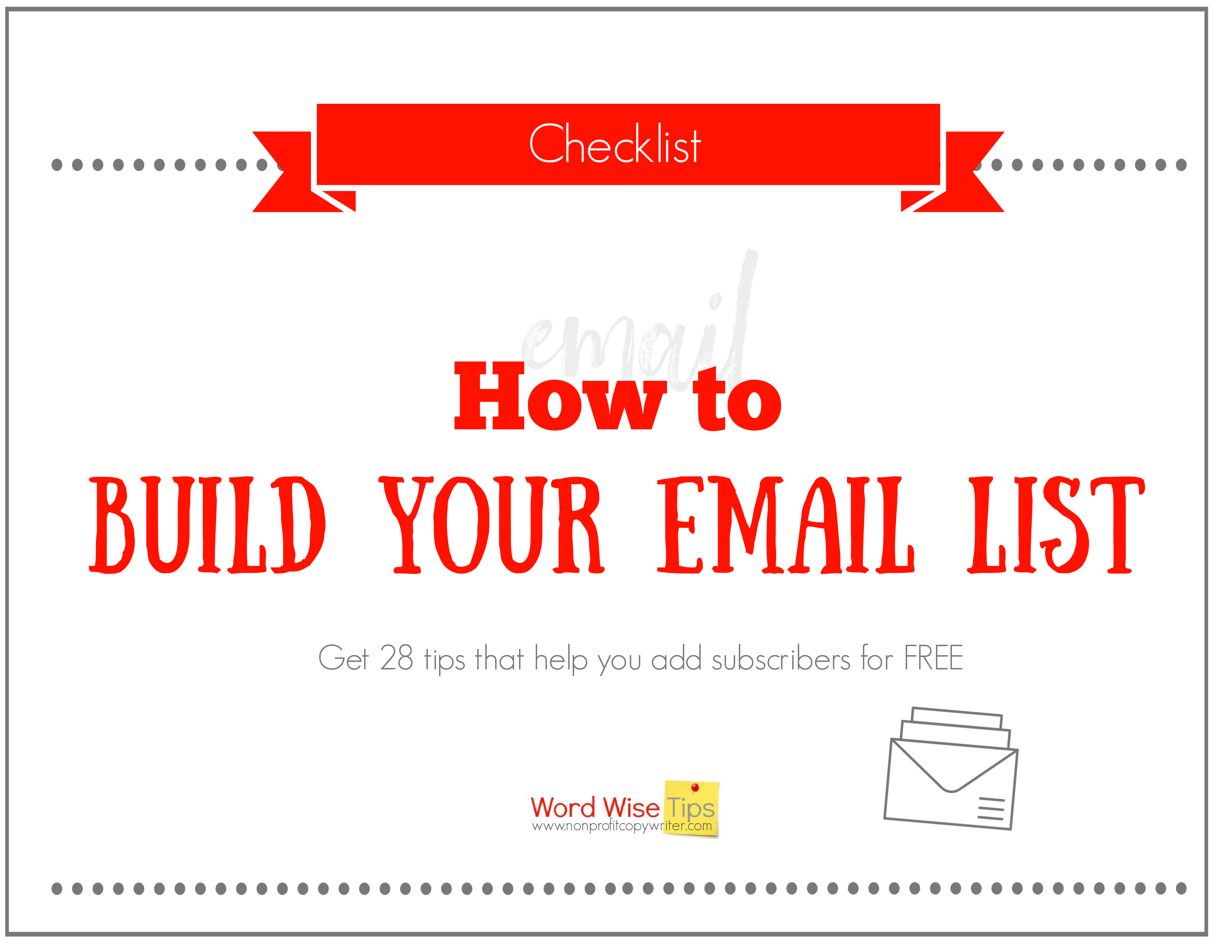
Use this FREE download to find and add email subscribers at no cost.
4. Publish helpful resources
Create checklists, guides, templates, worksheets, eBooks, or tutorials that will be helpful to your target reader. Use Canva, PicMonkey, or a simple PDF publishing tool. High-quality resources demonstrate expertise before someone ever hires you.
Plus, once you begin to build content for your particular niche, you’ll attract readers to your website. Don’t miss the chance to capture their email address so they become regular visitors by offering one of your resources as a useful opt-in.
5. Create Before-and-After writing samples
Find an email, web page, or other piece of content that needs improvement … it could be your own. Rewrite it.
Place the two pieces side by side in your portfolio as evidence of your work, showing how you improved grammar, clarity, headlines, organization, and readability. Visible improvements demonstrate skill better than descriptions alone.
6. Publish on LinkedIn
Build an active profile with recommendations, skills, certifications, and regular activity. Join LinkedIn groups associated with your niche and comment regularly. And publish posts with links to your articles on your website or blog. Helpful posts generate comments, shares, and recommendations — all forms of social proof — plus traffic to your site.
7. Guest post on other websites
When respected websites publish your work, they lend credibility. Guest blogging also introduces you to new audiences, so make sure you include a link back to your personal blog or website.
8. Volunteer your skills
Offer your writing services to nonprofits, community organizations, schools, churches, and clubs that are related to your niche. Contrary to belief, you are not writing for free. You’re gaining writing samples, referrals, and testimonials. (Be sure to ask for them.)
And your volunteer projects lead to paying ones. Early in my content writing journey, I wrote a fundraising appeal for a nonprofit at no cost. That one letter led to regular assignments from that organization for more than a decade.
9. Earn a certification
Relevant certifications demonstrate that you’ve invested time in learning about SEO, content marketing, Google Analytics, email marketing, UX writing, AI tools … or a myriad other skills. While certifications don’t replace experience, they reinforce your commitment to professional growth. Place your earned badge on your website.
10. Showcase your experience — paid and unpaid
Let’s say you’re targeting the health and sports niche. Use your bio to highlight your ...
- Education (you played college volleyball)
- Internships (you worked for a nutrition company one summer during college)
- Volunteer projects (you worked with a local nonprofit in rehabilitating your community ballfields)
- Leadership roles (you served as a volunteer volleyball coach)
- Nonprofit work (you led your team’s fundraising campaign)
Relevant experience builds your authority — and your confidence.
11. Ask for character recommendations
People who know your work ethic can still speak to your reliability. Consider asking former coworkers, supervisors, professors, volunteer coordinators, and colleagues to speak about your professionalism, communication, and dependability. If you are hiring a new writer, wouldn’t you appreciate hearing about his reliability from another professional?
12. Speak at events and on podcasts
The Rotary Club, Ruritans, Lions Club — they’re continually looking for speakers. Share your story about helping to revamp the local ballfield. Offer to present workshops in your area of expertise for libraries, business groups, community colleges, networking organizations, and nonprofits.
Teaching others demonstrates expertise. Likewise for podcasts — these interviews introduce you to new audiences while positioning you as someone with valuable knowledge to share.
Always distribute a feedback card or link. You’ll gather testimonials. And very often you’ll get invitations to speak, write, or consult elsewhere.
13. Answer questions online
Join Reddit, industry forums, and professional communities. Answer questions in your niche — always linking to your website. Generosity builds your reputation.
14. Publish case studies of your own work
Document how you improved your own website, launched a successful newsletter, increased search traffic, solved a real business challenge, motivated a team … walk readers through your process and results. Case studies don’t require paying clients.
15. Join a relevant professional organization
Membership demonstrates that you’re associated with like-minded professionals in your field. As a bonus, you will have access to the association’s resources, its membership roster, and its opportunities.
For instance, I’m a member of Christian PEN, a network of Christian writers and editors from all over the world, which opened the door for me to create and teach a grant writing class to members.
Once you become an association member, post its logo on your website and in your email signature.
16. Share your writing process
People trust transparency. Create content on your website that explains your …
- Research methods.
- Editing process.
- Before-and-after revisions. (See #5)
- Lessons learned.
- Client engagement process.
When you explain your process, you show that you are knowledgeable about what it takes to write quality content.
17. Collect early feedback
Ask beta readers, workshop participants, or people who use your free resources for honest feedback. With permission, feature their comments as testimonials about the value of your content. (See #12.)
18. Let others recommend you
Encourage colleagues, mentors, or peers to recommend your work when opportunities arise.
Explain, “I’ve entered the freelance writing space, and I’d like to expand my client base. I hope you’ll consider me when those you know need a writer.” Word-of-mouth remains one of the most trusted forms of social proof.
19. Write consistently
One excellent article is helpful. One hundred helpful articles establish authority.
Consistency is one of the strongest forms of social proof because it demonstrates commitment over time.

Use this guide to create a personalized writing strategy that works with your goals and schedule.
Build social proof starting today
If you’re starting today, here’s what you can accomplish within the next month:
- Publish four helpful blog posts.
- Complete one portfolio project.
- Volunteer for one nonprofit.
- Request two LinkedIn recommendations.
- Create one downloadable resource.
- Update your website and LinkedIn profile.
- Join a professional association.
- Share useful tips on social media each week.
Small actions add up quickly.
Build social proof faster when you avoid these common beginner mistakes
Waiting for clients
New writers think they have nothing to share until someone hires them. That’s simply not true. Share your knowledge now.
Hiding personal projects
Your own work demonstrates expertise. Don’t dismiss it because it wasn’t commissioned.
Trying to look bigger than you are
Never exaggerate your experience or invent testimonials in an attempt to build social proof. Authenticity builds trust far more effectively than inflated claims.
Ignoring opportunities to document progress
Keep track of your milestones (“published 10 articles about healthy eating for college athletes”).
Record lessons learned … measurable improvements … completed projects. Today’s small accomplishments become tomorrow’s social proof.
How to build social proof: FAQs
Q. Can I get clients without testimonials?
Yes. Many freelancers land their first clients through strong portfolios, educational content, networking, referrals, volunteer work, and a professional online presence.
Q. Are personal projects considered social proof?
Yes. Personal projects demonstrate your skills, creativity, and ability to complete quality work. They are especially valuable when you’re building a portfolio.
Q. Should I work for free to get testimonials?
Volunteer work for nonprofits, community organizations, or causes you care about can provide meaningful experience and testimonials without undervaluing your services. Write for free to get your foot in the door. But don’t stay in free mode forever.
Q. What’s the fastest way to build credibility?
Create valuable content consistently, showcase your best work, volunteer strategically, and ask people who know your work ethic for recommendations. Together, these efforts build trust surprisingly quickly.
Q. When should I start asking for testimonials?
As soon as someone benefits from your work — whether it’s a volunteer project, beta test, workshop, or paid assignment. Don’t wait until you’ve completed dozens of projects.
Use this worksheet to find and build your ideal audience.
Social proof is simply evidence
“No readers” and “no clients” do not mean “no credibility.”
- Every expert was once a beginner.
- Every thriving business once had no reviews.
- Every successful freelancer once wondered how to convince someone to take a chance on them.
The difference for these folks? It wasn’t luck. It was action. Instead of waiting for social proof to appear, successful professionals create opportunities to gather evidence of their expertise.
- They publish helpful content.
- They build portfolios.
- They volunteer.
- They document results.
- They ask for recommendations.
And little by little, they replace uncertainty with trust.
If you’re just starting your business, don’t focus on what you don’t have.
Focus on what evidence you can show.
Show your knowledge, your work, your consistency, your professionalism, and your willingness to help others — all powerful forms of social proof.
Start capturing them today, and you’ll make it much easier for your first client to become your second — and eventually your hundredth.
More Tips for Building an Audience
Social Proof: It's A Powerful Persuasive Copywriting Technique
5 Tips for Building an Audience When You've Just Started Writing
Want More Readers? Use the Know Like Trust Principle ...
Writing Samples: What are Clips, How Do I Get Them, and Other FAQs
Audience: Know Your Reader Before You Write
How to Build a Writing Sample Portfolio ...
Harness the Power of a Testimonial ...
Easy 4-Step Plan for Collecting Testimonials...
27 Content Ideas to Build Your Audience and Extend Your Reach
How to Get Testimonials at Events or When You Speak
Don't Market Your Writing. Do This Instead...
New writers need just 2 skill sets to succeed ....
Return from 19 Ways to Build Social Proof to Nonprofit Copywriter home
As an Amazon Associate I earn from qualifying purchases.
Share This Page

Named to 2022 Writer's Digest list
BEST GENRE/NICHE WRITING WEBSITE


Stop Wasting Time!
Grab your exclusive FREE guide, "5 Simple Writing Tips You Can Put to Use in 10 Minutes or Less"
 Subscribe To This Site