Save Time: Get 5 Simple Writing Tips
you can put to use in 10 minutes
20 Types of Evergreen Content That Build Traffic For Years
Updated 10.8.26
Award-winning writer Kathy Widenhouse has written 9 books and garnered 800K+ views for her writing tutorials.
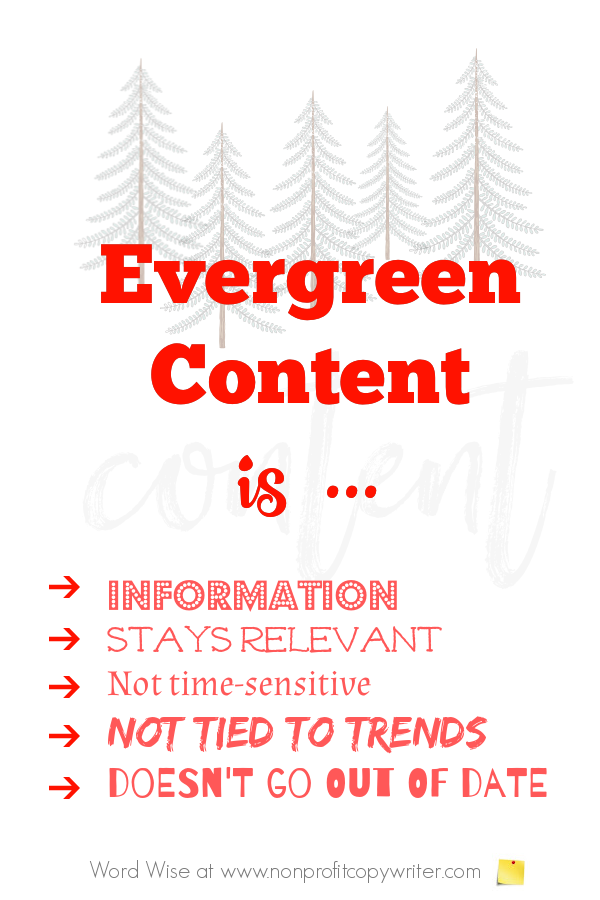
Evergreen content is information that stays relevant long after you publish it.
It’s content that’s not time-sensitive. Evergreen posts are not tied to the latest trends, news, or fads. Instead, evergreen topics never go out of date.
These are the kinds of posts that become the most-clicked pages on your website or blog. They return consistent traffic over time. Which is why bloggers and website owners love this kind of content. Right?
But you may think that creating evergreen content is a challenge. Haven’t the best topics already been covered? And what about saturation – if I write about an evergreen topic, won’t my post get lost in the internet morass because pages and pages have already addressed this very subject? Why would anyone read what I’ve written about this topic, anyway – aren’t there experts out there that will get more traction?
Don’t go there, my writing friend.
Your evergreen content offers YOUR unique viewpoint
With AI on the scene, content writing is taking a hit. Yet the most common pushback to AI-generated articles is this: “They’re impersonal.”
For instance, dozens of people have written about making a peanut butter and jelly sandwich. ChatGPT can give you a hundred explanations in under 0.52 seconds. But your method of making a PB&J – say with one hand, as a demonstration at birthday parties – is unique to you.
That uniqueness is the key reason writing evergreen content is so powerful. You write about a topic from your unique viewpoint to your audience in your voice.
Don’t minimize your experience or your hard-earned lessons. Others search for and read them. Go into depth and provide additional details about a topic in a way that is uniquely valuable to your readers, because guess what? They’re craving personality and honesty in an AI-generated world.
The case for writing evergreen content
Further, your evergreens speak to your target audience.
You write about topics that your readers care about ... like the toddler mom who desperately wants to know the most efficient way to make a PB&J with a little strapped to her hip.
That’s one reason evergreen content brings readers to your website or blog. Selective readers make up your core constituency. Once they connect with you and begin to follow you, they eventually become your true fans.
And a bonus: If you have a specific niche, you may find that there is less content on the web about your topic. (Honestly … who writes about PB&Js?) Smaller constituencies mean less competition. Use long-tail niche-related keywords as you write. Your evergreens will return stronger search results.
Who is your target reader? ID them with this step-by-step worksheet.
Should you include evergreen content in your blog or website?
If you’re a blogger or website owner, should you regularly add evergreen content to your site? Yes. Yes. And yes. Because evergreen content…
- Keeps bringing visitors to your website
Publish an article today, and it could still attract readers three years from now. Evergreen articles address questions people search for repeatedly, so your helpful content can continue generating organic search traffic long after you hit Publish. Plus, a well-optimized article that satisfies search intent can earn visibility over time, especially when it attracts quality backlinks. - Saves you time
Instead of constantly scrambling to produce fresh material, you build a library of useful articles that keep working for you. You may need occasional updates, but you don't have to start from scratch every week. - Helps establish your authority
When readers consistently find helpful answers on your website, they begin to see you as a trusted resource. And trust is a big step toward turning casual visitors into loyal followers and customers. - Generates leads around the clock
An evergreen article introduces readers to you. When you connect that article to your newsletter opt-in, a “I’d like more information” box, a free download, your course, your book, or one of your products, then that article becomes a lead-generation tool that works even when you're not. - Gives you content you can repurpose
One evergreen article can become a series of social media posts, an email newsletter lead story, an infographic, a short video, or a downloadable checklist. Write once. Use it again and again. - Builds your website's value over time
Think of evergreen content as a long-term investment. Each useful article adds to your website's collection of resources. Together, they become a body of work that strengthens your site's topical coverage (see Establish Your Authority, above) and creates more opportunities for internal linking. - Helps readers solve real problems
The best evergreen content answers questions that never really go away. They’re common to a particular segment of readers over space and time – questions like, How do I write a compelling headline? (Writers always need tips.) How do I teach my baby to sleep through the night? (Ask any parent since Adam and Eve.) How do I create a budget? (Even billionaires use them.) - It gives you material to share when you're short on ideas
Need something for tomorrow's newsletter? Pull out a popular evergreen article, freshen up the introduction, and share it with your subscribers. Good content deserves more than one appearance.
To that point … keep a record of when you publish articles in your newsletter. As the years go by, revisit your old schedules and identify articles that need updating. Even the most timeless topics can use a content tweak and fresh images.

Try These Kinds of Evergreen Content
Evergreen content comes in all shapes and sizes. The trick is choosing formats that answer questions, solve problems, or satisfy readers' curiosity long after publication.
Here are 20 types of evergreen content, what makes each one useful, and an example of each.
1. Best and Worst
Readers love knowing what works and what doesn't. Best-and-worst articles help them make decisions, avoid pitfalls, and learn from others' experiences. They're especially useful for attracting readers who are comparing options before making a purchase or trying something new.
Example: The Best and Worst Breads for Peanut Butter and Jelly Sandwiches
2. Case Studies
Show, don't just tell! Case studies share real-life examples of how someone solved a problem or achieved a result. They build credibility, demonstrate your expertise, and provide practical lessons readers can apply to their own situations.
Example: How One Mom Got Her Picky Eater to Love PB&J Sandwiches
3. Checklists
Who doesn't love checking something off a list? Checklists turn complicated tasks into manageable action items. They're easy to bookmark, share, and download, making them excellent tools for building your email list.
Example: The Ultimate Peanut Butter and Jelly Sandwich Checklist
4. Compare/Contrast
Should you choose A or B? Compare-and-contrast articles explain the similarities, differences, advantages, and disadvantages of two or more options. They attract readers who are making decisions and can help move potential customers closer to a purchase.
Example: Crunchy vs. Creamy Peanut Butter: Which Makes the Better Sandwich?
5. FAQs
Frequently asked questions address the things your audience wants to know most. An FAQ page or article can attract search traffic from specific questions, improve the reader experience, and provide opportunities to link to more detailed content.
Example: Peanut Butter and Jelly Sandwich FAQs: Your Questions Answered
6. Glossary
Every industry has its jargon. A glossary translates unfamiliar terms into plain English, making your website more welcoming to beginners. Glossaries can also attract search traffic from readers looking up definitions and help establish your website as a go-to reference.
Example: The PB&J Glossary: 20 Terms Every Sandwich Lover Should Know
7. Here's Why
Why do some peanut butters stick to bread better than others? Why do some PB&Js cut more smoothly? Here's Why articles explain the reasons behind common problems, behaviors, or results. They satisfy curiosity, demonstrate your knowledge, and attract readers searching for explanations.
Example: Here's Why Your Peanut Butter and Jelly Sandwich Gets Soggy
8. History of [Topic]
Sometimes understanding the past helps readers understand the present. History articles explain how an idea, practice, product, or industry developed over time. They add depth to your content library and can attract readers interested in background information and context.
Example: The History of the Peanut Butter and Jelly Sandwich: From Humble Beginnings to Lunchbox Favorite
9. How-To Guides
How-to guides are evergreen superstars! They teach readers how to accomplish a specific task or solve a problem. Because people continually search for practical instructions, a well-written how-to guide can attract visitors for years.
Example: How to Make the Perfect Peanut Butter and Jelly Sandwich
10. Interviews
Interviews bring fresh perspectives and expert insights to your website. Conversations with knowledgeable people add credibility, introduce readers to different viewpoints, and may attract new audiences when interviewees share the content. Focus on timeless advice rather than current events.
Example: A Chef Shares Secrets for Making the Ultimate PB&J Sandwich
11. Mistakes to Avoid
Nobody wants to get something wrong, especially when mistakes cost time or money. These articles identify common errors and explain how to prevent them. They're naturally engaging because they address readers' concerns while offering practical solutions.
Example: 7 Peanut Butter and Jelly Sandwich Mistakes You're Probably Making
12. New Methods
Readers are always interested in better ways to do things. Articles introducing new methods can demonstrate your expertise and help readers improve their results. To keep these articles evergreen, focus on the underlying principles and lasting benefits rather than temporary trends or technologies.
Example: 5 Creative New Ways to Make a Peanut Butter and Jelly Sandwich
13. Product Reviews
Product reviews help readers decide whether something is worth buying. Thorough, balanced reviews can attract purchase-minded visitors and generate affiliate income. Choose products with staying power, and update reviews as features, prices, and availability change.
Example: We Tested 5 Peanut Butter Brands: Which Makes the Best PB&J?
14. Q & A
Question-and-answer articles explore specific issues in a conversational format. Unlike a broad FAQ collection, a Q&A can dive deeply into one topic or feature an expert answering reader questions. This format works particularly well for addressing long-tail search queries.
Example: Ask a Sandwich Expert: Should You Spread the Peanut Butter or Jelly First?
15. Recipes
Recipes aren't just for food bloggers! At its core, a recipe is a repeatable formula for achieving a result. Whether you're sharing a homemade fertilizer recipe, a fundraising letter formula, or a favorite chocolate cake, recipes give readers practical instructions they can use again and again.
Example: 10 Delicious Peanut Butter and Jelly Sandwich Recipes Your Mom Never Taught You
16. Resource Lists
Save your readers the trouble of searching everywhere for helpful tools and information. Resource lists bring useful books, websites, templates, supplies, or services together in one convenient place. They're excellent for earning bookmarks and repeat visits, although links and recommendations need regular checking.
Example: Everything You Need to Make the Perfect PB&J Sandwich
17. Step-by-Step
Step-by-step articles break a process into a logical sequence, guiding readers from beginning to end. They're particularly helpful for beginners who need clear directions. Add photos, examples, or diagrams to make these articles even more useful.
Example: Make a Peanut Butter and Jelly Sandwich in 5 Easy Steps
18. Top # Lists
There's a reason articles like "10 Ways to Save Money" or "7 Tips for Better Headlines" are so popular. Numbered lists promise readers a specific amount of information in an easy-to-scan format. They're highly shareable and work well for introducing readers to a broader topic.
Example: 10 Surprising Ways to Upgrade Your Peanut Butter and Jelly Sandwich
19. Top Tips
Top Tips articles deliver practical advice readers can use immediately. Unlike comprehensive tutorials, they focus on quick improvements, shortcuts, and helpful techniques. They're easy to repurpose into newsletters, social posts, and downloadable tip sheets.
Example: 7 Quick Tips for Making Better Peanut Butter and Jelly Sandwiches
20. Trivia
Fun facts, surprising statistics, and little-known stories appeal to readers' curiosity. Trivia articles can attract social shares, encourage engagement, and make your content more memorable. Choose facts that won't quickly become outdated, and verify them with reliable sources.
Example: 15 Fun Facts You Never Knew About Peanut Butter and Jelly Sandwiches
Evergreen content is all about angles
Who knew the humble peanut butter and jelly sandwich could inspire so much content?
That's exactly my point.
You don't necessarily need 20 different topics to write 20 useful articles. You can take one topic and approach it from 20 different angles. Each format serves a different purpose. Some teach readers something new. Others help them make decisions, avoid mistakes, solve problems, or simply have fun.
Use this worksheet to create your content strategy with evergreen content.
Evergreen
content compounds
Here's what makes evergreen content especially powerful: Your articles can work together. You simply need to be strategic.
Imagine you publish five helpful articles about peanut butter and jelly sandwiches. Each targets a different question. You link them together, add a free recipe for gluten-free consumers, and invite readers to subscribe.
Now you've created more than five articles. You've built a mini-content hub that can attract readers. You connect those articles with internal links. Together, they demonstrate your expertise and grow your email list. And you keep adding to it week after week, month after month.
Soon you’ll be the internet’s PB&J’s top expert!
One
important reminder about your evergreen content
Like evergreen shrubs that need to be fertilized, watered, mulched, and pruned, evergreen content doesn't mean “build it and forget it.”
Statistics change. Links break. Techniques evolve. Even your best evergreen articles deserve periodic checkups and new images to keep them accurate and useful.
The bottom line: Trendy content gets attention today. Evergreen content has the potential to keep earning attention tomorrow, next month, and years down the road.
For writers and bloggers, that's a pretty compelling reason to plant a few evergreen seeds and nurture them.
More Blog and Content Writing Tips
Does Your Content Pass The 7-Second Rule Test?
Use a Blog Post Worksheet to Save Time and Frustration ...
The 20-Minute Blogger (eBook or paperback) ...
What Is a Blog … and How Does It Work?
Avoid the Biggest Guest Blog Post Boo-Boos ...
The 20-Minute Blogger: Take a Writing Course That Saves Time ...
Free Online Micro-Course: Why Build Your Blog?
How To Make Money From Blogging: A Quick Tutorial ...
How To Write An Opening Paragraph for Your Blog Post ...
How to Build a Content Writing Strategy for Your Blog or Website ...
Picture This: Where to Find Free Images for Your Blog or Website ...
3 Tips for Writing a Tagline for Your Blog or Biz ...
5 Writing Tips for Bloggers in a Time Crunch ...
How to Create Writer's Guidelines for Your Blog or Biz ...
Free Download: Top 10 Blog Writing Tips Checklist ....
Blog Post Length: How Long Should My Blog Post Be?
4 Writing Tips for Starting a Blog or Website ...
Tips on Blog Writing: 3 Kinds of Blogs ...
Blog Writing Template: How One Blogger Writes 5 Quality Posts a Week ...
Tips for Choosing a Blog Post Type ...
How to repurpose your blog post into additional pieces of content ...
More Blog Writing Tips on our Pinterest board ...
Return from 20 Evergreen Content Writing Ideas to Nonprofit Copywriter home
As an Amazon Associate I earn from qualifying purchases.
Share This Page

Named to 2022 Writer's Digest list
BEST GENRE/NICHE WRITING WEBSITE

Stop Wasting Time!
Grab your exclusive FREE guide, "5 Simple Writing Tips You Can Put to Use in 10 Minutes or Less"
 Subscribe To This Site