Save Time: Get 5 Simple Writing Tips
you can put to use in 10 minutes
Copywriting as a Job:
Advantages and Disadvantages
Award-winning writer Kathy Widenhouse has written 9 books and garnered 800K+ views for her writing tutorials.
Updated 12.9.25
“Copywriting as a job. What’s it like?” asked the high school girl as she interviewed me for a class project on careers.
This young lady excelled in her English classes … was an avid reader … loved to write … but she was afraid she would not be able to make a living as a writer or editor.
“Take a look all around you,” I told her, pointing out websites, social media sites, newspapers, magazines, reports, letters, and printed matter of all kinds. “Somebody has to write all of this. And they get paid to do it.”
Why couldn’t that somebody be her – or you?
If you’re thinking about copywriting as a job and wondering whether freelancing is the right path, you’re not alone. That was me.
I was drawn to the freedom and flexibility of freelance work—but I also wanted a clear picture of what the lifestyle is really like before I invested time in learning the craft and money on courses and coaching. Here’s a straightforward look at what I discovered are the advantages and disadvantages of freelance copywriting so you can decide for yourself.
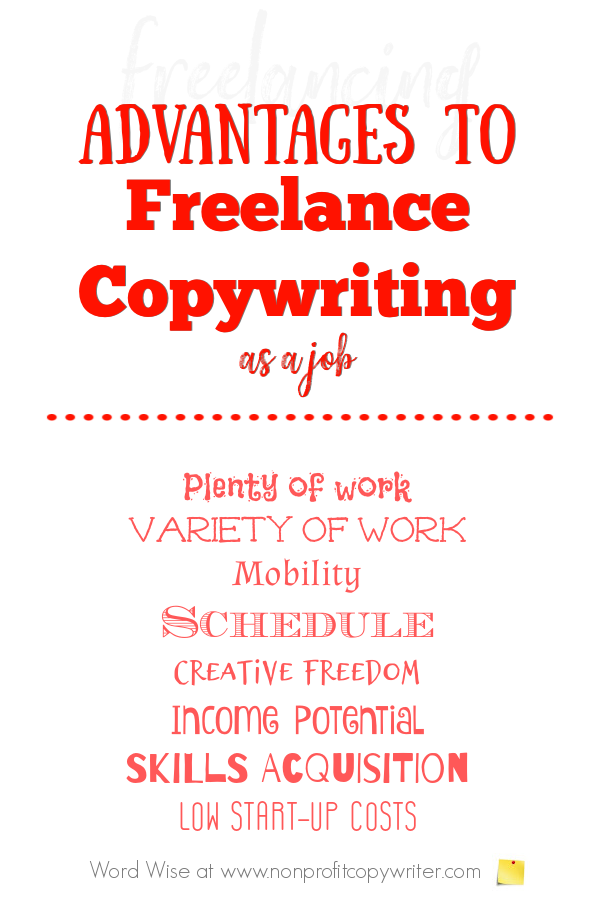
Copywriting As a Job: The Advantages
1. Plenty of work
Companies, organizations, small businesses – everyone needs the written word. Most leaders are too busy to write, don’t like to write, or don’t write well. That’s why they hire staff writers or freelance copywriters.
2. Variety of work
If you get bored doing the same thing every day, freelance copywriting keeps things interesting. No two weeks look the same. One day you’re writing a sales page, the next you’re interviewing an expert, and the next you’re planning an email sequence.
And it’s not just the variety of projects that offers stimulation. The content differs, too. You can write about health care, politics, travel destinations, finance – or the spotted purple frog. All kinds of businesses need good writing. Most freelancers eventually find a niche, developing skills and a portfolio in a particular area. One copywriter friend writes exclusively for law firms, attorneys, and about legal issues. Another labels himself, “The Dental Copywriter.” Seriously.
3. Mobility
Freelancers have the freedom of working from home or an office of their choosing: A coffee shop. Beach bungalow. Kitchen table. If you have your laptop and Wi-Fi, you’re in business. I spent many afternoons and evening pecking away in the front seat of my car at athletic field while my kids were at practice.
4. Schedule
One of the biggest perks of the freelance life: you get to set your own hours. Want to work early mornings? Late nights? Take a random Tuesday off? Go for it.
I found this to be particularly useful when my children were in school. I could put in hours while they were at class and then – while I was building my biz and when I had multiple deadlines – in the evenings after they went to bed. Freelancing gives you the freedom to shape your workload around your life instead of the other way around.
5. Creative freedom
Speaking of freedom, as a freelancer you’re not stuck writing whatever lands on your desk. You can say yes to clients you enjoy and no to the ones that drain you. As your business grows, you can niche down—healthcare, nonprofits, real estate, SaaS, fundraising … whatever subject matter means the most to you. I found a writing home with faith-based nonprofit organizations.
Plus, the marketplace continues to grow and change, providing the opportunity for you to develop skills for new kinds of writing projects. A couple of decades ago, social media was in its infancy. Today, businesses devote entire staff positions to social media copywriting. AI is on the road to specialization.
6. Income potential
There’s no salary band holding you back. If you need money, you can accept extra gigs and earn your way out of the hole. You can increase your fees when you specializeor offer extra services like strategic planning or coaching alongside writing. In your free time, you create digital products or write books to sell on your own.
7. Skills acquisition
A distinct advantage of becoming a copywriter is that it’s a reachable goal for anyone who works hard enough. You don’t need to have a college degree to find well-paid work as a copywriter. Take courses, get critiqued, study all kinds of copy, and start building a portfolio. Freelancers learn to:
- Write in multiple voices
- Research quickly
- Interview confidently
- Manage clients
- Juggle projects
- Market themselves
The learning curve can be steep, depending upon your background. (Sidebar: yes, you need to put in the time and effort.) However, you gain marketable skills that you can leverage to build your business or use in another career.
8. Low start-up costs
You don’t need fancy equipment … an office lease … a staff … inventory … a bank loan. A laptop, internet connection, and a small starter portfolio are enough to begin.
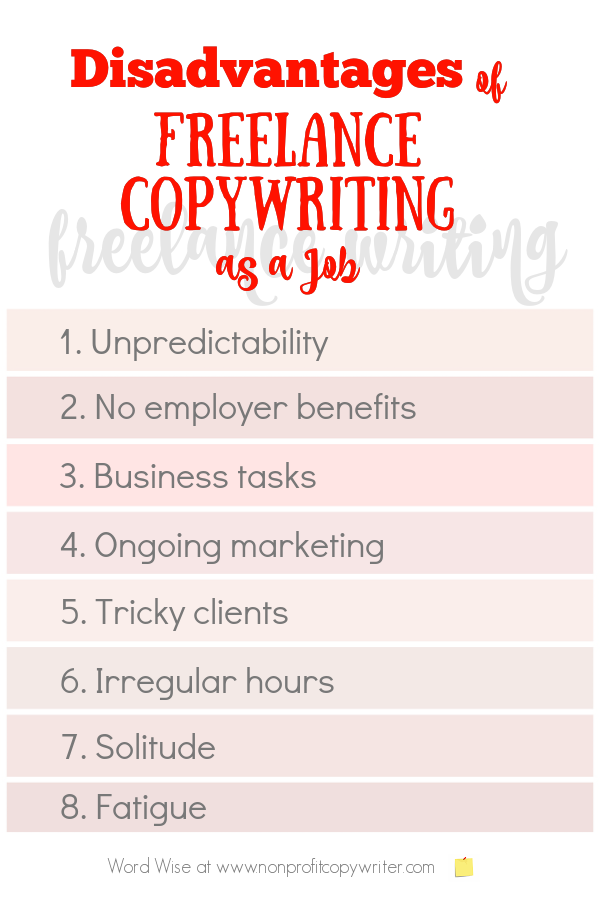
Freelance Copywriting As A Job: Disadvantages
1.
Unpredictability (especially at first)
Feast-or-famine cycles are real. Expect irregular income until you build a reliable client base, retainer work, and a referral system. Keep your full-time gig and work evenings and weekends until you’ve built your savings so that in slow months you can still pay your bills.
2.
No employer benefits
As a freelancer, you’re responsible for your own:
- Health insurance
- Retirement savings
- Paid time off
- Sick days
- Professional development
Those extra costs and responsibilities require planning.
3.
Business tasks
By
choosing a freelancing life, you’re signing up for two jobs: writer and
business manager. You’ll be responsible for the behind-the-scenes work that
keeps your freelance business running. That includes all the tasks that help
you find clients, deliver work smoothly, and stay profitable, including …
- Prospecting
- Answering emails
- Scheduling calls, interviews, and meetings
- Creating proposals
- Managing projects
- Following up with clients
- Planning your workload
- Updating your website and portfolio
- Invoicing
- Tracking finances
You can learn these skills one at a time. Just make sure you set apart time in your schedule to do so.
4. Ongoing marketing
Even experienced freelancers have to keep their pipeline full. An active website and social media accounts help – as well as acquiring anchor clients, a robust referral system, and multiple streams of writing income.
5. Tricky clients
A client needs brochure content. You have a great idea for a fresh approach, but he wants to stick with the organization’s usual slant. A good copywriter figures out how to meet the client’s needs using the client’s parameters … not her own. Translation: you need to be diplomatic.
That’s why freelancers learn to channel their individual preferences into personal projects. (Having said that, following a client’s preferences often requires more creativity than a writer may have ever dreamed possible.)
And then there are the clients who don’t provide information promptly … change deadlines … delay their payments. Most clients pay on time, but some don’t. Net-30 or net-45 terms can slow your cash flow. Deposits help. Plan on pursuing payments from time to time. And pack your patience for the long haul.
6.
Irregular hours
Speaking
of inconsistent clients … yes, you control your freelancing schedule. But here’s
a reality check: client deadlines, overbooking, time zones, and multiple
projects can lead to late nights or weekend work.
7.
Solitude
Freelancing
offers freedom, but it can also feel lonely. For introverts, this is not a
disadvantage since they naturally most productive in solitude. But if you get
energy from being around others, find ways to prevent feelings of isolation. Regardless
of your personality type, plan to learn ways to balance solitude and
interaction with others so you can be mentally healthy.
8.
Fatigue
Freelancers
need to produce good content even if the writing muse doesn’t strike. Churning out words day in, day out can get
tiring. Smart writers know they can’t write for hours each day without filling
their “creative tank.” To do so means burnout.
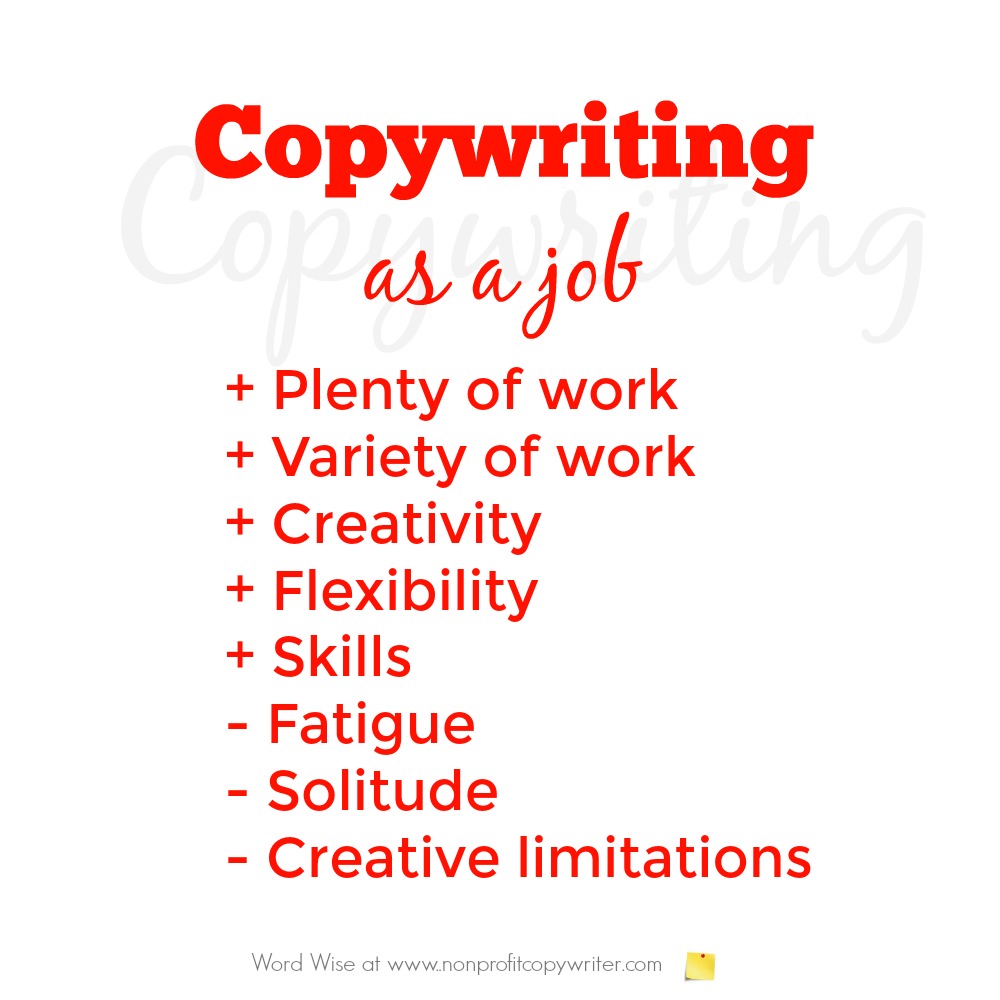
Is freelance copywriting for you?
If you’re exploring copywriting as a job, freelancing can open doors to flexibility, creativity, and income potential that traditional roles may not offer. But it also requires self-discipline, steady marketing, and the ability to wear several hats behind the scenes.
Understanding both the perks and the challenges helps you make a confident decision about whether freelance copywriting is the best next step in your writing career.
I found freelance copywriting to be one of the best-kept secrets in the job market. Reliable writers are needed everywhere and there are not enough good ones to go around. As long as people use words to communicate, there will be an abiding need for writers who can use words to get a message out persuasively.
Writers like you.
More on Newbie Copywriting
Maker Time vs. Manager Time For Freelance Writers ...
Beat Writer’s Block When You Eat the Frog First ...
The Writing Life: You Can Make a Living With Your Words ...
How to Create a Content Calendar ...
5 Fun Gifts for Writers: Useful Gadgets for Capturing Ideas on the Go ...
21 Ways To Beat Writer’s Block and Jumpstart Your Project ...
Start Your Writing Day With a Quick Win and Get Momentum ...
5 Valuable Tips for Writing at Home ...
5 Non-Writing Skills Every Writer Needs ...
Kinds of freelance writing projects you can be paid to write ...
Newbie copywriting: kinds of projects copywriters do ...
How to build a writing sample portfolio ...
12 Tips for Staying Busy Writing - Productively ...
Newbie copywriting website glossary, part 1: internet acronyms ...
Newbie copywriting website glossary, part 2: ten basic terms ...
Writer's Block: 3 tips for starting your writing project ...
How to find Christian freelance writing jobs ...
8 Books for Freelance Writers ...
More on our Copywriting Basics Pinterest board ...
Return from Copywriting as a Job to Nonprofit Copywriter home
As an Amazon Associate I earn from qualifying purchases.
Share This Page

Named to 2022 Writer's Digest list
BEST GENRE/NICHE WRITING WEBSITE


Stop Wasting Time!
Grab your exclusive FREE guide, "5 Simple Writing Tips You Can Put to Use in 10 Minutes or Less"
 Subscribe To This Site