Save Time: Get 5 Simple Writing Tips
you can put to use in 10 minutes
Should You Learn Grant Writing?
A Freelancer’s Guide to One of the Most Profitable Writing Niches
Award-winning writer Kathy Widenhouse has written 9 books and garnered 800K+ views for her writing tutorials.
Posted 6.16.26
“We found a grant opportunity and would like to apply. Could you write the grant proposal for us?”
That question from a nonprofit client gave me the chance to learn grant writing.
Writing grants, I knew, was a specialized skill — one I was a bit nervous to tackle. A worthy cause would be placing its funding future in my hands.
Yet I soon discovered the fun in combining clear facts with storytelling in a structured format.
And that was nothing compared to my elation when my client was awarded the grant. My words had helped fund a project that would help hundreds.
What is grant writing?
Grant writing is a specialized writing niche.
Nonprofits, schools, community organizations, and research institutions depend on grants to support their programs and services. Grant writers help these groups apply for these funds from foundations, corporations, and government programs.
Grant writing is a form of persuasive writing — you’re writing to convince a funder to award resources for your project. But unlike advertising or sales copy, grant writing focuses heavily on research, facts, data, and persuasive storytelling supported by evidence.
How to know if grant writing is right for you
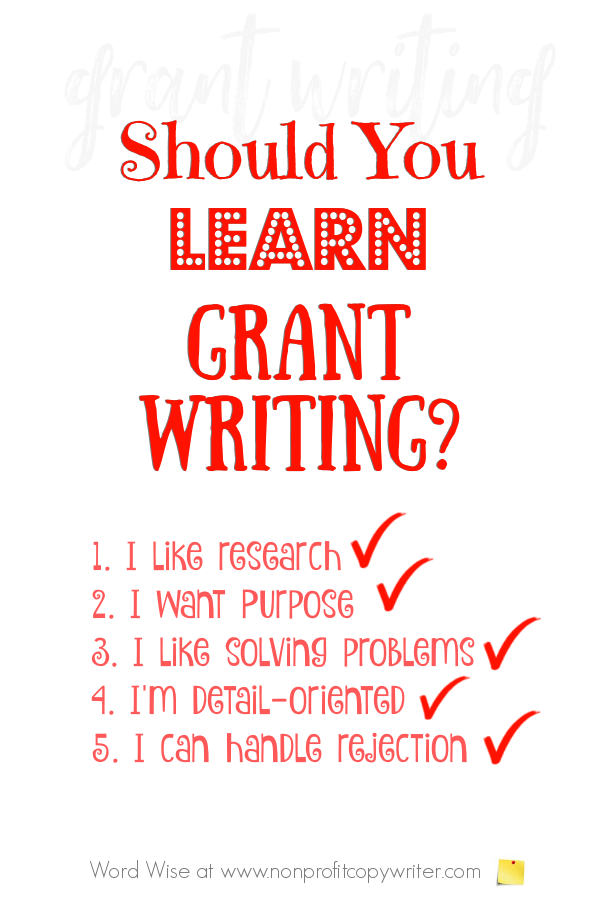
One of the easiest ways to determine whether grant writing fits your personality is to ask yourself a few questions.
Do you enjoy research?
When you write a grant, you spend significant time gathering information about funders, nonprofit programs, community needs, budgets, and outcomes. If you love digging into details and uncovering information, that’s a positive sign.
Do you enjoy writing with a purpose?
Maybe you, like so many freelancers, get frustrated with blog posts that disappear into the internet … crickets when you post an article on Medium. Grant writing allows you to see a direct connection between your work and real-world impact.
Do you like solving problems?
A grant proposal is essentially a problem-solving exercise. You’re helping organizations answer a fundamental question: “Why should someone invest money in this project?”
Are you detail-oriented?
Grant applications have strict guidelines, deadlines, formatting requirements, and application instructions. Missing a small detail can result in an immediate rejection.
Can you handle rejection?
Successful grant writers understand that rejection is part of the process. They focus on long-term results.
If you answered “yes” to most of these questions, grant writing may be worth exploring.
What type of person makes a good grant writer?
Successful grant writers often share several personality traits.
- Curiosity. Successful grant writers thrive on learning. A few hours digging around the internet to unpack statistics and stories? Yes, please.
- Organization. Even simple grant proposals require supporting documents, budgets, application requirements, and deadlines. A good grant writer keeps everything straight and on schedule.
- Patience. Grant proposals can take weeks or months to complete. Grant writers are okay with multilayered projects over a quick “write-and-publish-in-an-hour” fix.
- Persuasion. Grant writers must explain complex programs in ways that inspire confidence and action. Your experience with copywriting or basic persuasive writing skills is a good foundation for that challenge.
- Helpfulness. The best grant writers are motivated by the opportunity to support nonprofits, schools, healthcare organizations, and community programs. They offer encouragement and a positive attitude when working closely with executive directors and nonprofit leaders — the battle-weary workers on the front lines.
Extra insight: Introverted writers find grant writing appealing because it relies more on research and writing than constant networking or self-promotion.
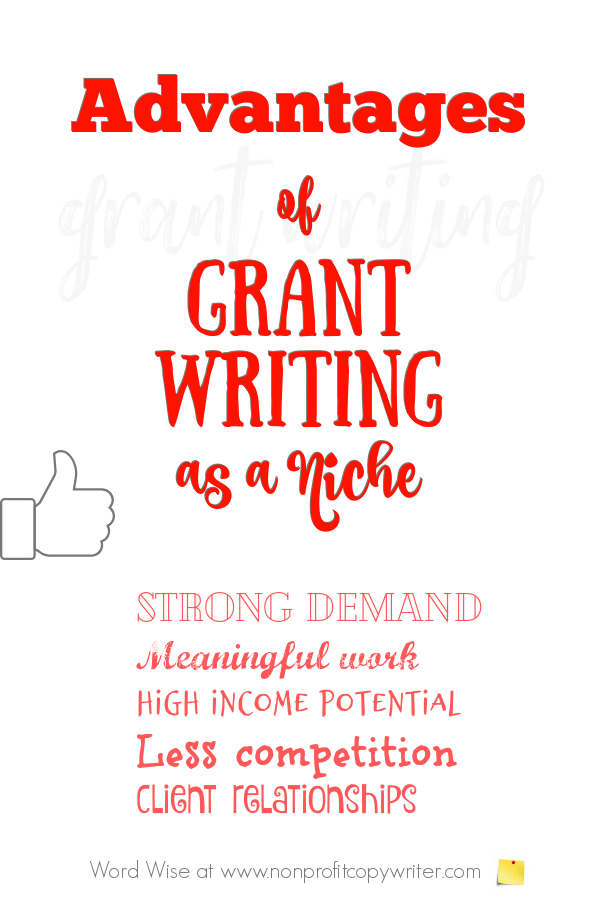
Advantages of learning grant writing
If you choose to learn grant writing, you'll soon discover some significant pluses to this unique specialty.
Strong demand
Nonprofits need funding to survive and grow — and thousands of nonprofits across the United States compete for grants every year. Many lack the staff or expertise needed to write successful proposals. That creates an ever-growing demand for freelance grant writers to step into the gap and provide this crucial service.
Meaningful work
A successful proposal can fund a homeless shelter, provide meals for seniors, support medical research, improve education, or help families facing hardship. Your writing can make a difference for causes you believe in — but more importantly, can help change the lives of their beneficiaries. Many writers find this type of work more fulfilling than promoting products or services.
High income potential
Can you make money from grant writing?
Yessiree. Experienced grant writers often charge anywhere from several hundred to several thousand dollars per project. Some charge hourly rates, while others charge flat project fees or monthly retainers. You’ll figure out what’s best for you.
Bottom line: Organizations understand that securing funding can generate significant returns — the grant award itself, plus the subsequent leverage that comes with being a vetted grant recipient. They’re willing to invest in skilled grant writers.
Less competition
Grant writing has a much smaller talent pool compared to content writing, blogging, or general copywriting. Freelance writers avoid the niche because they (wrongly) assume it’s too complicated. That creates opportunities for you if you are willing to learn the skill.
Long-term client relationships
Nonprofits submit grant proposals throughout the year. Once you establish yourself with an organization, you can become their go-to grant writer. That leads to ongoing work and predictable income.
Disadvantages of learning grant writing
No writing niche is perfect. Before jumping in, it’s important to understand some of the challenges.
Expect a steep learning curve
You need to learn how a grant proposal is structured. Plus, there’s grant terminology, budgets, logic models, outcomes measurement, grant management concepts …
It takes time to develop familiarity with the lingo and the appropriate writing skills. I learned them on the job. You can accelerate your learning curve by taking a grant writing basics course.
Expect deadlines that can be stressful
Grant opportunities have firm submission deadlines. If the cutoff is 5:00 PM EST on June 15 and you click “Submit” at 5:01 PM, you’re out of luck.
That’s why a valued grant writer knows part of the job is staying on top of the nonprofit staff to secure the information, documents, and financials needed for an application — well ahead of time. Nonprofit leaders and staff are notoriously overworked, so you need to be a gentle but persistent pest. When a deadline approaches, you’ll coordinate information from multiple people — even pressing them — to make sure everything is completed on time. Unless you prefer to have panic attacks.
Expect some rejection
Every grant application you write will not succeed. Funders receive more applications than they can support … grant reviewers have a preference for one project over another (they’re human). Even an outstanding proposal may not receive funding. Be prepared for proposals to be rejected. (On the upside ... expect some surprise awards, too!)
Expect administrative work
Research, document collection, budget review, application portals, reporting requirements, and communication with clients — those tasks are not glamorous. They require attention to detail and tact.
Expect complexity
You may need to learn about healthcare for special needs senior citizens, education trends in remote areas, specialized environmental backstream studies, workforce development in the inner city, housing initiatives for non-citizens, detailed electromagnetic research goals and outcomes, or another specialized topic.
If you like digging into details and learning new things, grant writing may be for you. But if you don’t want to wade through studies or take the time to confirm data you get from AI, you may get frustrated.
Who should learn grant writing?
Grant writing is especially worth considering if you are:
- A freelance writer looking for a specialized niche
- A nonprofit professional seeking additional skills
- A former teacher or educator
- A researcher
- A journalist
- A technical writer
- A communications specialist
- A fundraising professional
- A retired professional looking for consulting opportunities
The skills you develop in grant writing can also transfer into fundraising, nonprofit management, donor communications, and program development.
Use this tool to uncover if a grant opportunity is a good fit for your nonprofit.
Is grant writing a good niche for freelancers?
For many freelancers, grant writing can be an excellent niche.
Why? Because clients often view grant writing as an investment rather than an expense.
A blog post may generate uncertain results. A PowerPoint presentation can be completed in-house by an intern. A grant proposal, however, has the potential to bring in thousands — or even millions — of dollars in funding. This creates a different value perception and supports higher fees.
Further, grant writing attracts clients who appreciate professional expertise and long-term relationships. As a freelancer, this has been a boon for me. I’ve maintained some grant writing clients for a couple of decades.
If you’re looking for a niche that combines income potential, meaningful work, and relatively low competition, grant writing deserves serious consideration.
Can grant writing be a good side hustle?
Yes.
Many freelancers learn grant writing as a side hustle before transitioning into it full-time. You can start by helping a local nonprofit, church, school, or community organization. As you gain experience and build a portfolio, you can gradually increase your rates and expand your client base. Part-time grant writers find they can schedule projects around existing work commitments.
But be forewarned: To learn grant writing requires preparation, research, and attention to detail. It isn’t a “quick money” side gig.
Is grant writing right for you?
Grant writing isn’t the perfect niche for every freelance writer. Should you learn grant writing?
If you dislike research, deadlines, and detailed documentation, you may find yourself grinding your teeth in the struggle.
But if you enjoy helping organizations achieve meaningful goals … love solving problems … appreciate structured writing … want to develop a specialized skill that remains in demand — grant writing may be one of the smartest niches you can learn.
The best way to find out is simple:
- Study the basics.
- Take a grant writing course.
- Review a few successful grant proposals.
- Try writing a grant proposal for a local nonprofit.
You may discover that grant writing is exactly the opportunity you’ve been looking for — and a skill that can transform both your freelance business and the organizations you serve.
More Grant Writing Tips
Grant Writing Made Simple: 7 elements of a grant proposal ...
Grant Writing for Beginners: getting started with the fundamentals ...
Grant Writing Acronyms You Need to Know ...
How To Read a Grant Application So You Can Write a First-Class Grant ...
Nail the 5 Stages to Writing a Grant ...
My Top Grant Writing Tip: It's Not about Writing, After All ...
Grant Writing: How to Write a Letter of Inquiry ...
Grant Application Attachments Checklist: Get Organized, Save Time ...
Get more Writing Tips for Grants on our Pinterest board...
Return from Should You Learn Grant Writing? to Nonprofit Copywriter home
As an Amazon Associate I earn from qualifying purchases.
Share This Page
Named to 2022 Writer's Digest list
BEST GENRE/NICHE WRITING WEBSITE
Stop Wasting Time!
Grab your exclusive FREE guide, "5 Simple Writing Tips You Can Put to Use in 10 Minutes or Less"
 Subscribe To This Site