Save Time: Get 5 Simple Writing Tips
you can put to use in 10 minutes
3 Things I Wish I’d Learned Before Writing My First Book
Award-winning writer Kathy Widenhouse has helped hundreds of nonprofits and writers produce successful content , with 750K+ views for her writing tutorials. She is the author of 9 books. See more of Kathy’s content here.
Posted 2.3.26
If I could hop into a time machine and sit down with my pre–first-book self, I wouldn’t give myself advice about agents, royalties, or Amazon algorithms.
Nope. Before writing my first book, I’d tell myself three much simpler things. Not flashy things. Not “guru” things. Just the kind of stuff you only learn after you’ve already done it the hard way.
These three lessons fall into three phases of the book-writing journey:
- Before you write
- While you’re writing
- After the book is published
And every one of them would have saved me time, stress, and more than a few forehead-on-desk moments. If you’re flexing your fingers at the keyboard and getting ready to dive into your first book manuscript, maybe my takeaways will help you.
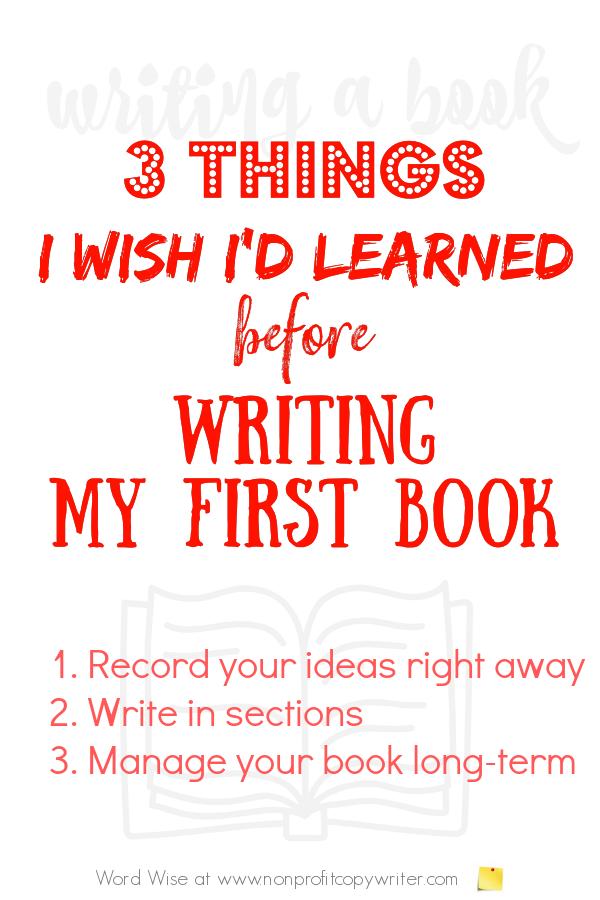
Lesson 1: Before writing my first book, I’d tell myself …
Write your ideas down before you start the book.
This is about the pre-writing phase. News flash: Memory is not your friend.
When you first get the idea for a book, something magical happens. Ideas start showing up everywhere.
- In the shower.
- While driving.
- Waiting in the check-out line.
- Right before you fall asleep.
- Mid-conversation with someone who has no idea you just mentally abandoned them.
Early on, I thought, This idea is good. I’ll remember it. I did not remember it. And as I started writing my book, I kept kicking myself for forgetting all those goodies. I discovered I couldn’t hold the entire book in my head.
What I wish I’d known is this: Your job before you write the book is not to write chapters — it’s to capture thinking. Write everything down, including …
- Half-formed thoughts
- Random examples
- Stories you might use
- Phrases that feel right
- Questions readers might ask
Use whatever tool works for you to capture those thoughts: Note cards … a messy Google Doc … notes on your phone … voice memos. The only requirement is that your method be easy for you to access. If it’s not convenient, you won’t use it. And you’ll lose all those luscious ideas.
Capture your ideas over weeks or even months before you officially start your book. This does two things:
- It takes pressure off your brain to hold everything.
- It gives you raw material to work with later.
Think of it like stocking your pantry before you cook. You’re not making the meal yet — you’re just making sure you won’t starve halfway through.
Lesson 2: Before writing my first book, I’d tell myself …
Make an outline and write in sections.
This is about the actual writing process. I had to learn to give myself grace … and permit myself to be human.
When I started my first book, I thought I had to write the book in order. That is, start with the introduction and proofread it. Then move to Chapter 1, proofread it … and then proceed to Chapter 2 … and Chapter 3, and so on.
But then — horror of horrors — I started Chapter 6 and realized it needed to be Chapter 2. Worse, I wasn’t writing consistently every day. Yes, I had a full-time job and two young children, but authors are supposed to power through, right? I was flunking the “writing my first book” test!
That mindset makes writing feel heavy fast.
What I wish I’d known is this: Books don’t need to be written linearly. They need to be written modularly.
A book outline changes everything. Not a rigid, joy-killing outline — but a flexible one that says:
- These are the main sections
- These are the ideas that belong together
- This is the job of each part
Once you have that, you can write Chapter 6 before Chapter 2. You can draft sections when energy is high. You can skip parts you’re stuck on and come back later.
You don’t need to write the whole book at once. You don’t even need to feel “in the mood” every time. You’re building a structure, piece by piece.
This approach …
- Reduces overwhelm.
- Makes progress visible.
- Keeps you writing instead of freezing.
Writing a book isn’t one heroic act. It’s a series of manageable moves.
Lesson 3: Before writing my first book, I’d tell myself …
Your book will go off the publisher’s list.
This is about publishing — and long-term ownership. And this lesson surprised me the most, especially because I had a publishing contract for my first book.
To be fair, at that point, self-publishing was not even on the fringes of opportunity. Nevertheless, when you’re new, it’s easy to think, Once my book is published, it’s… published. Forever. Safely. Locked into the world.
That’s not how it works. Traditional publishers keep books in print as long as they make financial sense. Eventually, many books go out of print or off the publisher’s list. And when that happens, one of two things is true:
- You know how to self-publish and re-release your book, if you choose.
- Your book quietly disappears.
I wish I’d learned self-publishing earlier — not instead of traditional publishing, but alongside it. Self-publishing gives you control, allowing you to update, revise, and reposition your book and re-release it, extending its life.
What I wish I’d known is this: Publishing isn’t the finish line — it’s just another phase.
Your book is an asset. Learn how to manage it long-term.
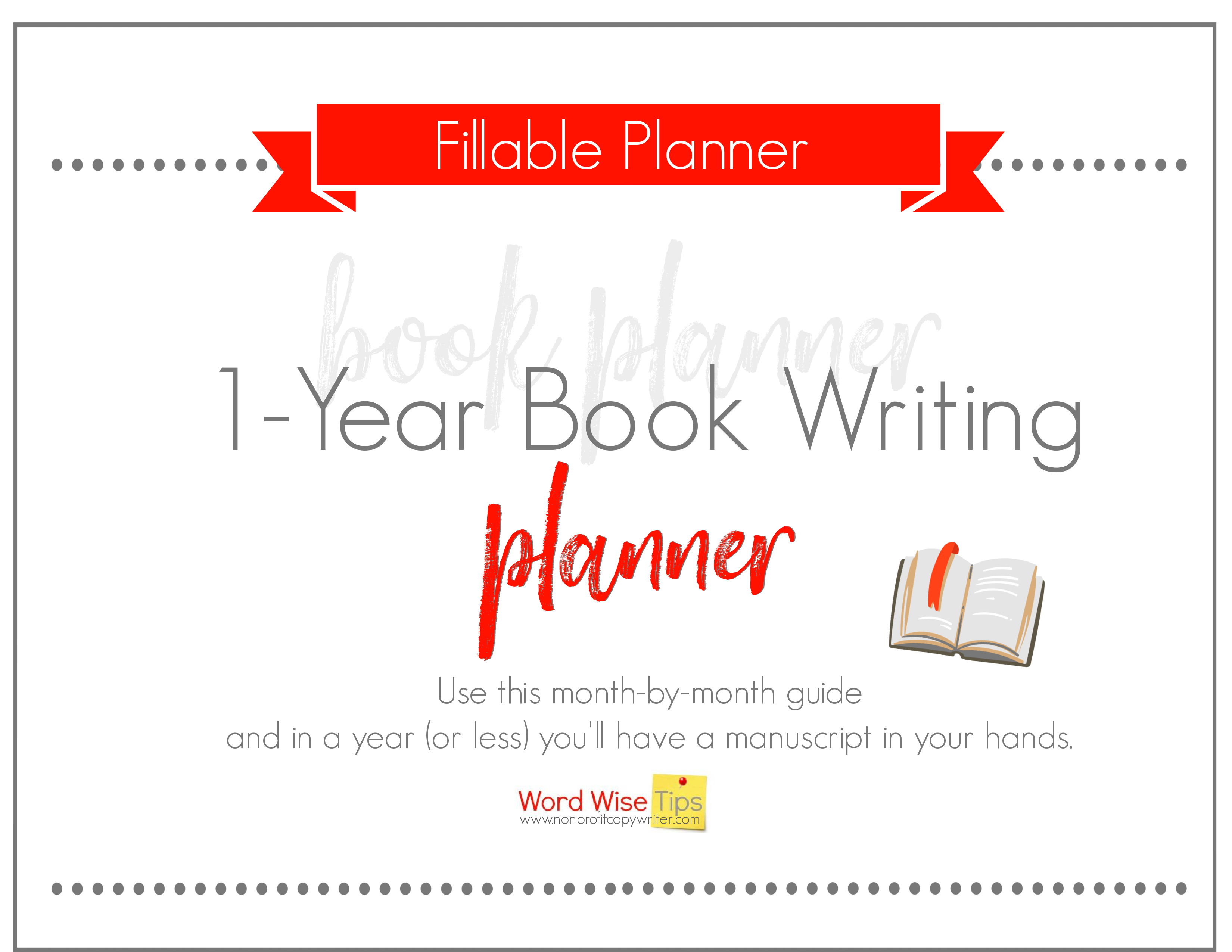
Use this planner with its month-by-month guide to write your book in a year or less.
Writing a book is a process, not a moment
If there’s one theme running through all three lessons, it’s this:
Writing a book is not a single act — it’s a process that unfolds over time.
- You prepare before you write.
- You write in pieces, not perfection.
- You think beyond the initial launch.
Since writing my first book, I’ve written eight more — proof that mistakes make us better when we learn from them. If you’re early in your book-writing journey, take this as encouragement. You don’t need to know everything right now.
But knowing these three things sooner can make the whole experience calmer, smarter, and far more sustainable.
And that alone is worth learning before you write your first book.
More Book Writing Tips
Getting started writing a book: free, 28-page eBook ...
How To Get Started Writing a Book With a Brain Dump ...
Test Your Book Idea with These 4 Questions ...
How to Use a Personalized Book Writing Plan to Get Your Book Done ...
5 Places to Find Book Ideas ...
How to Publish a Book for Free...
Writing eBooks: Frequently Asked Questions ...
See more tips for Writing a Book on my Pinterest board...
Return from 3 Things I Wish I’d Learned Before Writing My First Book
to Nonprofit Copywriter home
As an Amazon Associate I earn from qualifying purchases.
Share This Page

Named to 2022 Writer's Digest list
BEST GENRE/NICHE WRITING WEBSITE

Stop Wasting Time!
Grab your exclusive FREE guide, "5 Simple Writing Tips You Can Put to Use in 10 Minutes or Less"
 Subscribe To This Site